How to Choose Heavy Equipment for Material Handling: A Practical Decision Guide
A practical guide to selecting heavy equipment for material handling, covering load profiles, site conditions, duty cycle, attachments, safety, and total cost of ownership.
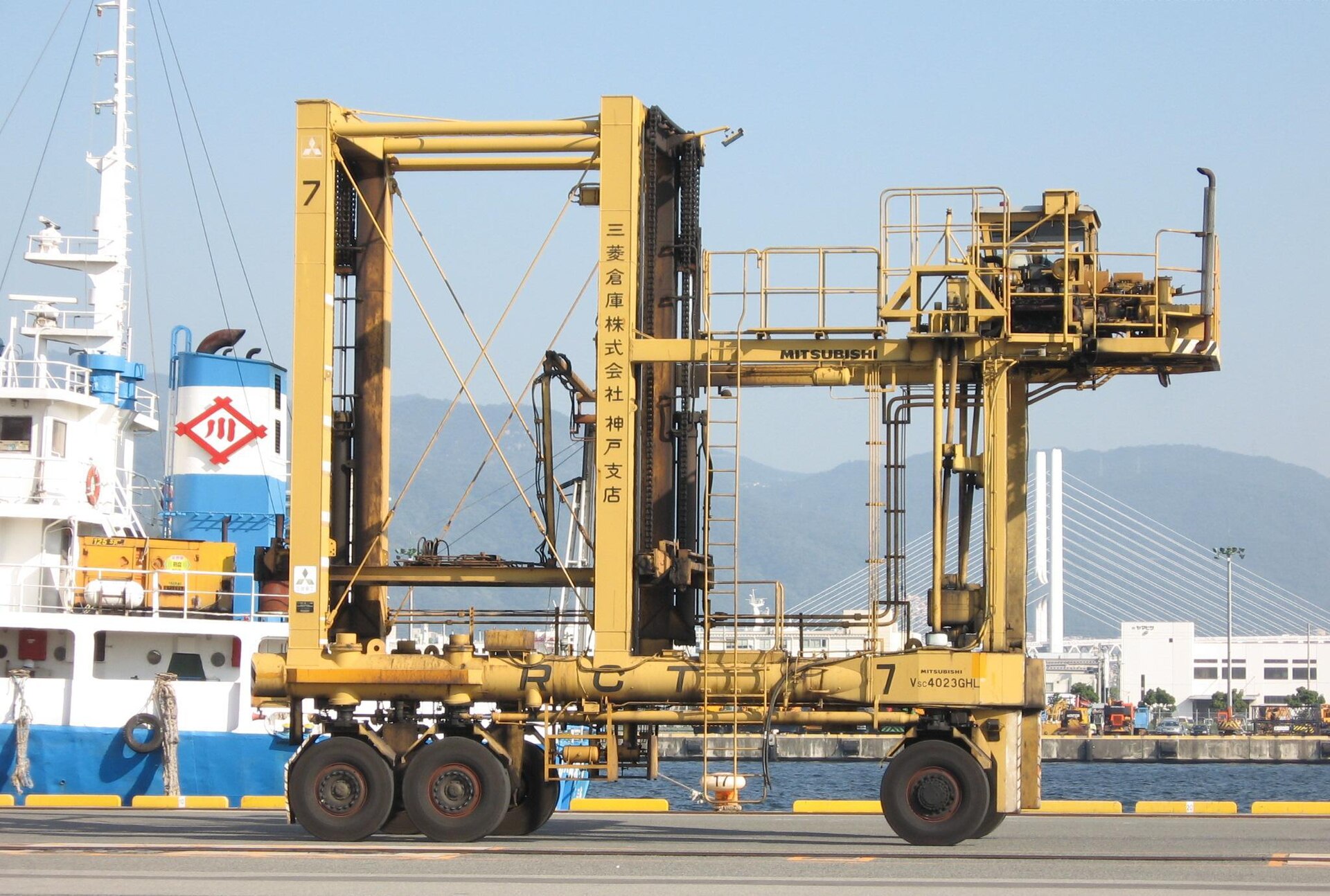
Cover: Own work · Wikimedia Commons · CC BY-SA 4.0
Question: How do I choose the right heavy equipment for material handling?
Start with the load and the task
Define exactly what will be moved: loose bulk material, palletized goods, pipes, steel, containers, or mixed debris. Record the typical weight, dimensions, lift height, and frequency of movement. The nature of the task—loading, transporting, stacking, placing, or feeding—points toward different machine families and attachment needs.
Match machine class to material and path
Palletized loads usually suit counterbalance forklifts or reach trucks, while rough-terrain needs often point to telehandlers. Wheel loaders excel at moving bulk piles over short distances; excavators with grapples handle mixed or heavy debris; cranes are for lifting and precise placement. Consider whether the travel path is paved, flat, soft, sloping, or congested.
Evaluate site conditions and space
Indoor warehouses with narrow aisles require compact machines with tight turning radius. Outdoor stockyards demand high ground clearance, durable tires or tracks, and enough power to handle ramps and uneven surfaces. Check ceiling height, door widths, ramp gradients, ground bearing capacity, overhead lines, and load-bearing floors before selecting a machine size.
Consider duty cycle and utilization
A machine used for a few hours per week has different requirements than one running multiple shifts. Continuous, high-intensity work demands heavy-duty hydraulics, larger cooling systems, and easier access for routine service. For light or occasional use, simpler equipment may be acceptable—but never at the expense of safety margins or rated capacity.
Plan for attachments and future flexibility
Forks, buckets, grapples, jibs, and rotating attachments allow one machine to handle many tasks. Check whether a quick coupler is available, whether hydraulic flow and pressure support the intended implements, and whether adding an attachment reduces the machine's rated lifting capacity. Future flexibility can justify a different base unit than the obvious short-term choice.
Make safety and visibility part of the spec
Operator visibility is a critical selection factor. Look for seat belts, rollover protection, falling-object protection, backup alarms, mirrors, cameras, and effective braking. Review pedestrian routes, racking layout, overhead obstructions, and blind corners. Make sure the selected machine can be operated with appropriate certification and that training materials are available.
Estimate the total cost of ownership
Purchase price is only one part of the equation. Fuel or energy, tires or tracks, scheduled maintenance, attachments, insurance, operator wages, and resale value all affect the real cost per ton moved. A slightly more expensive machine with lower downtime and better dealer support can be more cost-effective over its working life.
Verify support and parts before committing
Choose equipment with proven local dealer support, readily available parts, and documented service procedures. Check whether operators and maintenance staff can access manuals, diagnostics, and training. The hidden cost of waiting for parts or service expertise often outweighs a low initial price.