Walking a warehouse floor, you quickly see the real decision problem: when loads come on pallets one minute and in cartons the next, a single-purpose tool forces you to choose. Dedicated pallet stackers handle skids but leave boxes to a separate cart, and flat carts move cartons but can't lift a pallet. The 2-in-1 Hydraulic Lift Stacker 440LB Pallet Fork Cart w/ Platform is designed to close that gap. This review looks at whether the dual fork-and-platform design actually makes sense for a small warehouse or workshop.
Quick Verdict
For $259.99, this manual hydraulic stacker combines a pallet fork stacker and a flatbed cart. It lifts pallets up to 36 inches with a 440 lb / 200 kg rating, making it a fit for modest loads and shallow lifts. If your work fits those limits, the dual design is a practical option.
Who It Suits
This unit suits small workshops, retail stockrooms, and light warehouse lines where loads stay within a light-duty range. The adjustable forks, from 5.5 to 18.5 inches, make it easier to handle different pallet openings. The detachable steel platform is a plus for moving cartons and non-palletized items without switching equipment. It is less ideal if you regularly stack to high racking or handle loads above the unit's comfort zone.
What Stands Out
The strongest feature is the dual-purpose design. You get a pallet fork stacker and a flatbed cart in one unit, so you don't need to park two machines in your aisle. The foot-pedal hydraulic lift is leak-resistant and raises loads smoothly for controlled placement. The Q235 carbon steel frame points to a heavy-duty build, and the flatbed mode extends the usefulness beyond pallets. It's a compact tool for lighter lifting jobs.
2-in-1 Hydraulic Lift Stacker 440LB Pallet Fork Cart w/ Platform
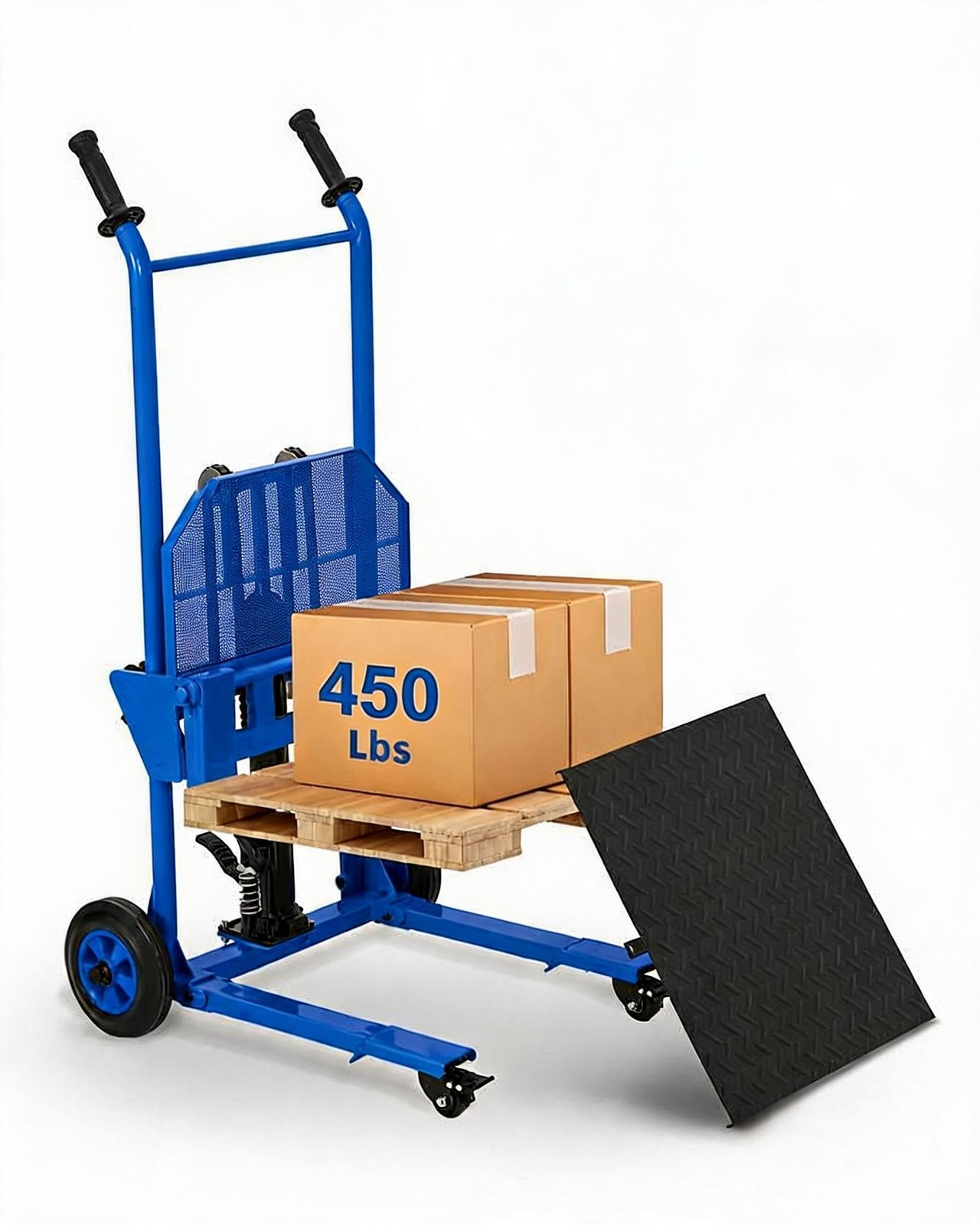
The $259.99 price is a concrete reason to consider this if your operation doesn't require powered equipment: you're getting a fork stacker and a platform cart in one new, steel-built unit. The main limitation is the lift envelope-36 inches and 440 lbs means you'll need a separate solution for taller stacking or heavier pallets. The adjustable forks and detachable platform give it enough flexibility to earn its keep in a light-duty workspace.
Meaningful Trade-Offs
Because lifting is done by foot pedal, each raise is a manual action. That keeps the machine mechanical and simple, but it won't match the speed of a powered stacker. The max lift height is the key trade-off: enough for loading docks or low shelves, not for reaching upper racking. The load rating, while fine for many cartons and light pallets, leaves no room for heavy skids. You're trading raw capability for versatility and the convenience of one machine instead of two.
Bottom Line
If you need a single manual stacker-cart that handles light pallets and loose cartons without taking up extra floor space, this dual-purpose stacker deserves a close look. Your decision should hinge on whether your loads fit the unit's operating envelope; if they do, the fork-and-platform combo is a genuinely useful tool for a warehouse, shop, or stockroom.