Quick verdict
If your goal is turning feed ingredients into uniform pellets, this TECHTONGDA Feed Pellet Mill Machine has the core specs for the job. The 150 KG/H output is a maximum in an ideal state, not a continuous guarantee, so treat it as a ceiling rather than your everyday rate.
Who it suits
It fits small and medium livestock farms, poultry operations, aquaculture setups, and individual farmers who want to process feed on site. It works as a standalone mill and can be matched with a straw cutter for better results.
What stands out from the listed details
The 4 MM pressure plate is well matched to poultry and small livestock pellets, and the three-head pressure roller plus cast-iron body are the main build details. Power comes from a 3.5 KW motor on 220 V single-phase electricity, which is convenient for many farm buildings.
Product note
220V Feed Pellet Mill Machine 4MM 150KG/H Efficient Feed Processing Equipment
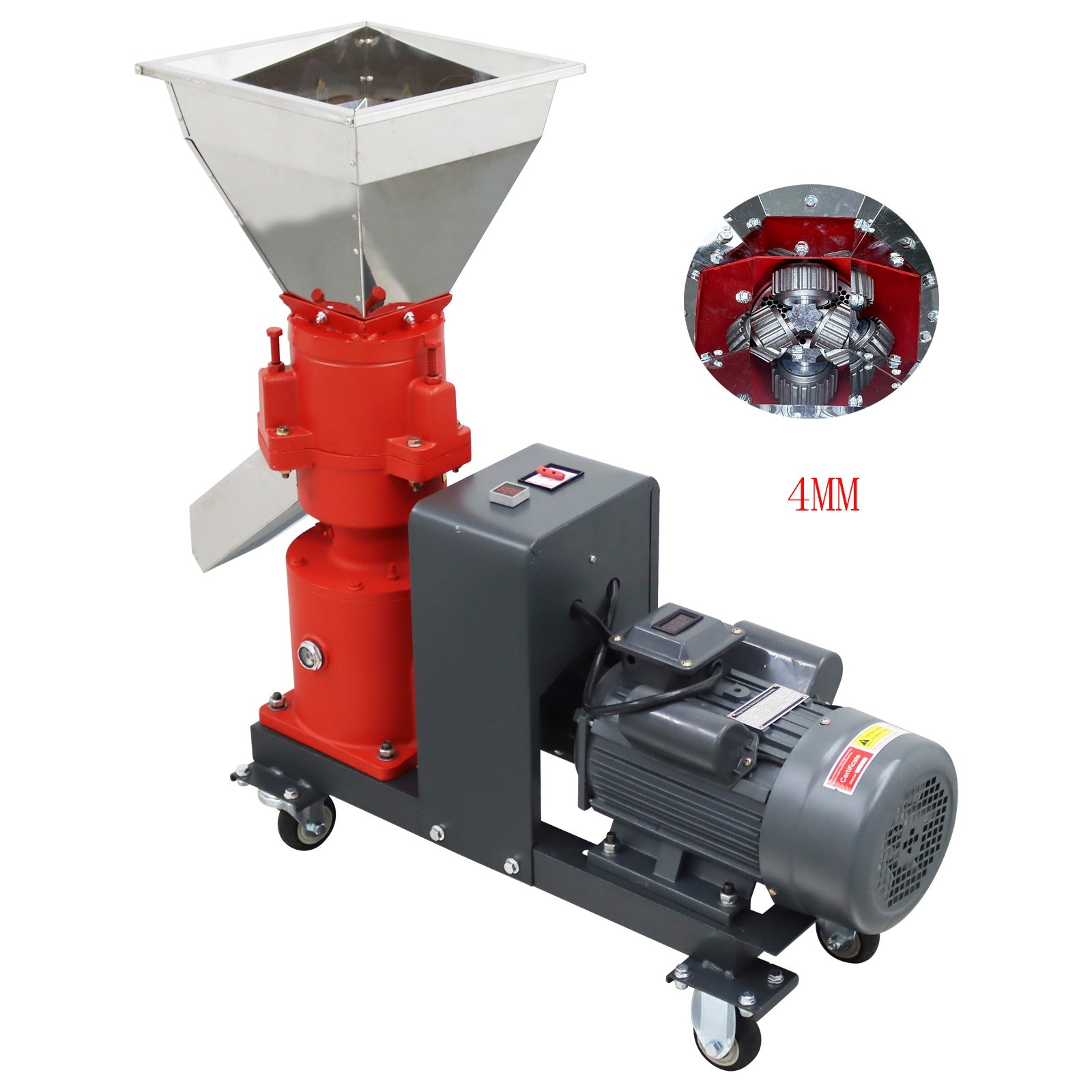
At USD 855.40, this mill earns its place when you want one unit dedicated to making feed pellets at the die size it comes with. The three-head pressure roller and cast-iron construction are strong reasons to consider it for routine feed processing. The limitation: 150 KG/H is only maximum under ideal conditions, and the machine comes with no plug, so you will need to arrange the electrical connection. It is also meant for feed ingredients, not wood or plastic.
Meaningful trade-offs
The output ceiling only exists in ideal conditions; real throughput will vary with feed moisture and recipe. The machine has no plug, so hooking it up is part of the setup. It is designed only for feed materials, so the wood and plastic restriction is a real boundary. If your animals need a pellet diameter other than the one this unit is built around, you are limited to one die size.
Bottom line
For a farmer who has 220 V single-phase power and wants to process feed on site, this TECHTONGDA Feed Pellet Mill Machine is a practical addition to livestock feed equipment. At USD 855.40, you are paying for a 3.5 KW pellet mill and a machine matched to a specific pellet size. Go in with realistic throughput expectations, handle the electrical connection, and keep it on feed duty.